

You start the dryer. Forty-five minutes later the towels are still wet. So you run it again. That second cycle has quietly become part of your laundry routine.
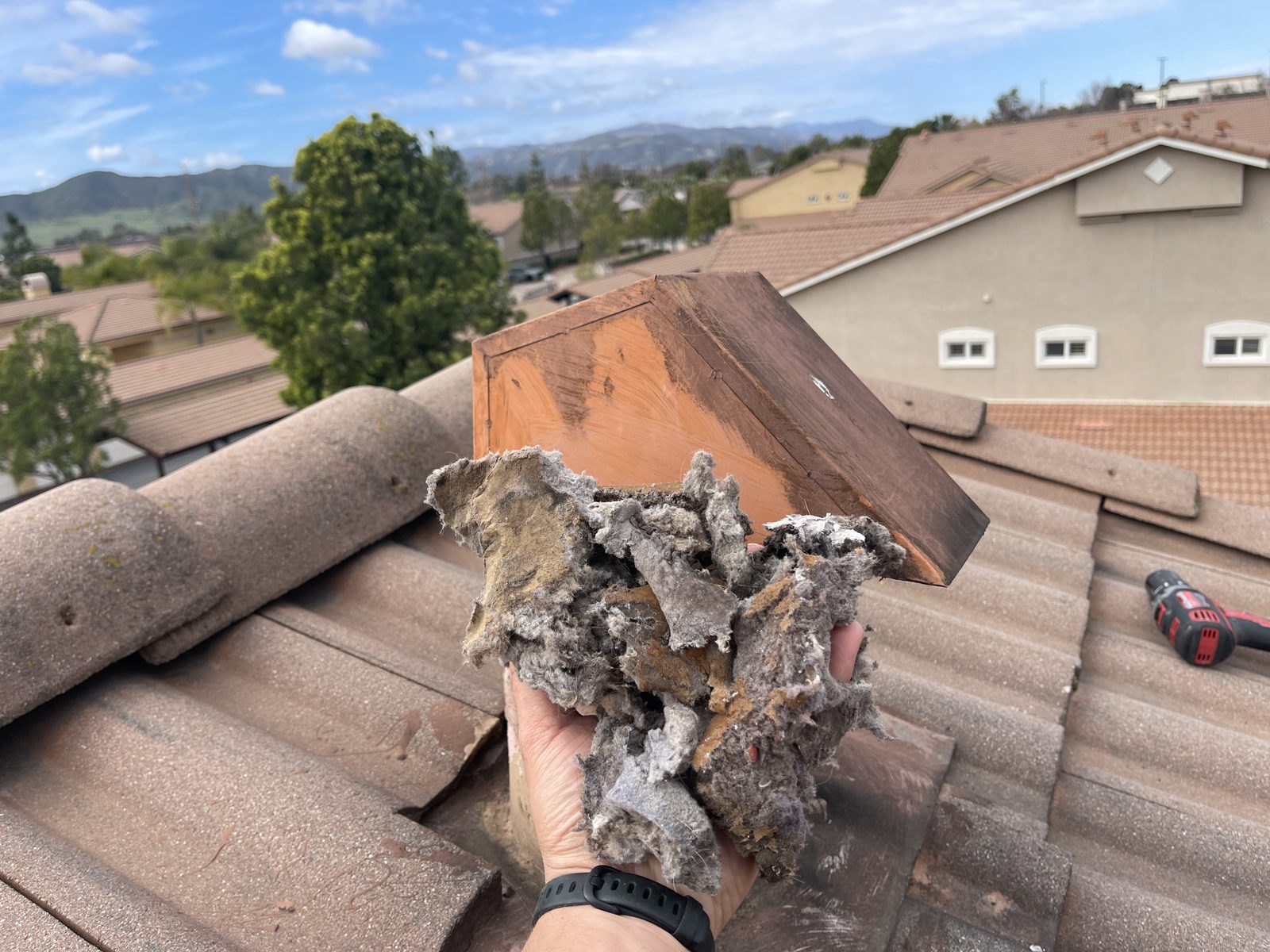
Most people assume the dryer is dying. Nine times out of ten on the jobs I run around Murrieta and Temecula, the dryer is fine. The vent line behind it is packed with lint.
What is actually happening
A dryer does not “dry” clothes so much as it moves hot, wet air out of your house. That air has to travel through the duct behind the dryer, through the wall or up through the attic, and out the termination on your wall or roof.
Lint sticks to the inside of that duct a little at a time. Once the line gets restricted, the hot wet air has nowhere to go. It sits in the drum. Your clothes stay damp, the dryer runs hotter, and the cycle takes twice as long.
The dryer is working harder than ever. It just cannot push the moisture out.
Five signs it is the vent, not the dryer
Check these before you pay for a repair call.
1. The laundry room gets hot and humid. If the room feels like a sauna after a load, that moisture is escaping into the room instead of going outside.
2. Clothes come out hot but damp. A failing heating element gives you cool, damp clothes. A blocked vent gives you hot, damp clothes. That is the tell.
3. The outside vent flap barely moves. Go outside while the dryer is running. You should feel a steady push of warm air. Weak air, or a flap that stays shut, means a restriction somewhere in the line.
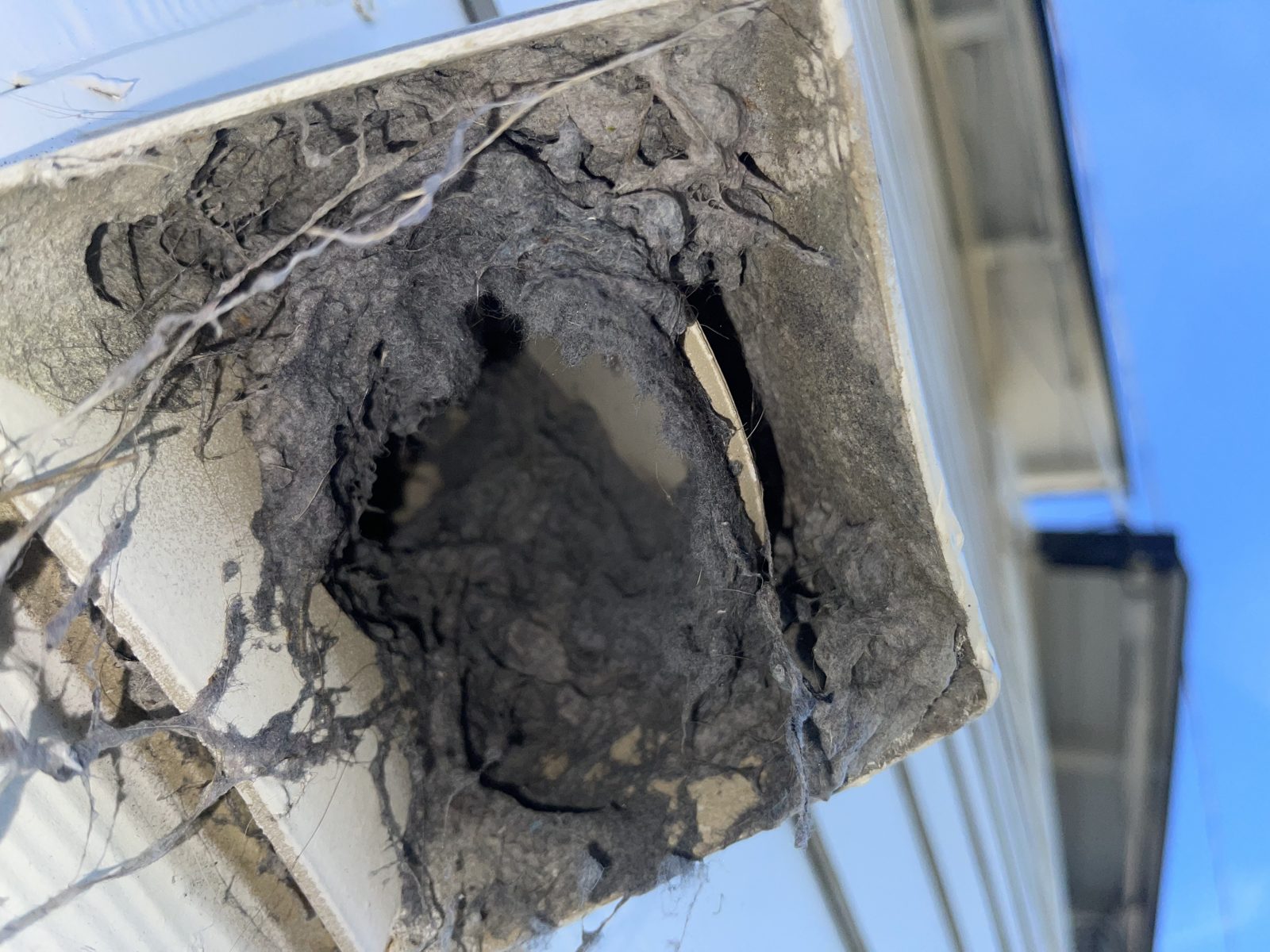
4. There is lint on the ground under the outside vent. Lint escaping at the termination means a lot more is sitting inside the duct.
5. You smell something hot. A warm, dusty smell during a cycle means lint is sitting against hot metal. Stop running the dryer until it is checked.
What makes it worse around here
A few things I run into a lot in the Temecula Valley:
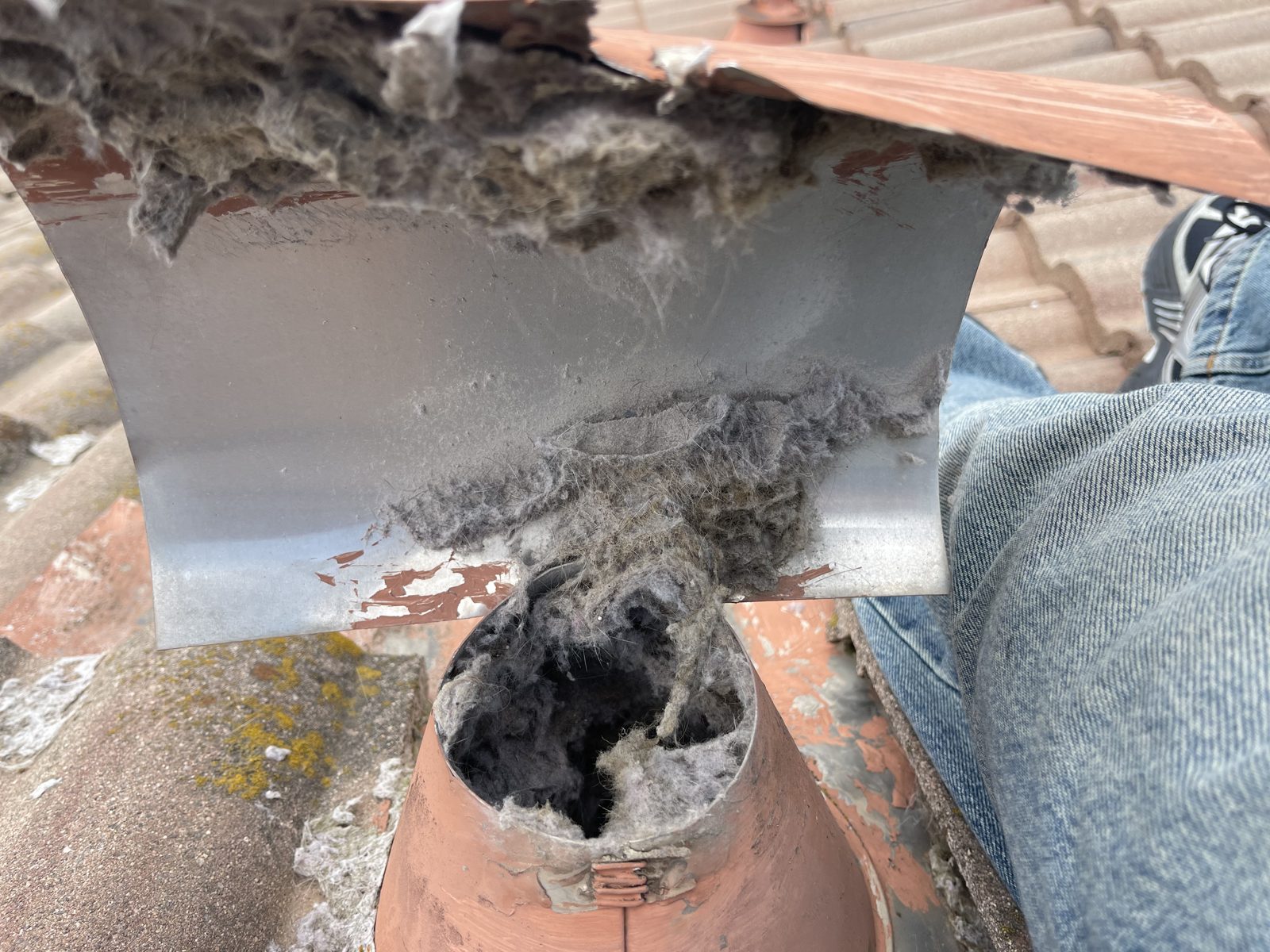
Roof terminations. Plenty of homes here vent straight up through the attic and out the roof. That is a long vertical run, and gravity pulls loose lint back down into the line. Roof-vented homes clog faster than side-wall homes, plain and simple.
Crushed transition ducts. The flexible connector between the dryer and the wall is called a transition duct. When someone pushes the dryer flat against the wall, that duct folds over on itself. I find kinked and crushed ducts on a big share of the homes I visit. It is one of the most common causes of a slow dryer, and one of the easiest to miss.
Screens and cages over the exterior cap. People add them to keep birds out. They work great at that, and they also catch lint like a net. If your cap has a screen on it, that is the first place to look.
New home, still clogged. Builders sometimes leave drywall dust, insulation, and construction debris in the line. I have cleaned brand new homes that were already restricted.
Can you clean it yourself?
Partly. Anyone can pull the dryer out, disconnect the transition duct, and vacuum what they can reach. That is worth doing, and it will help a little.
What you cannot reach is the part that matters. The buildup usually sits in the middle of the run, inside the wall or the attic, or right at the exterior cap. A shop vac from the laundry room end does not get there. Leaf blowers pushed into the duct tend to pack the lint tighter, not clear it.
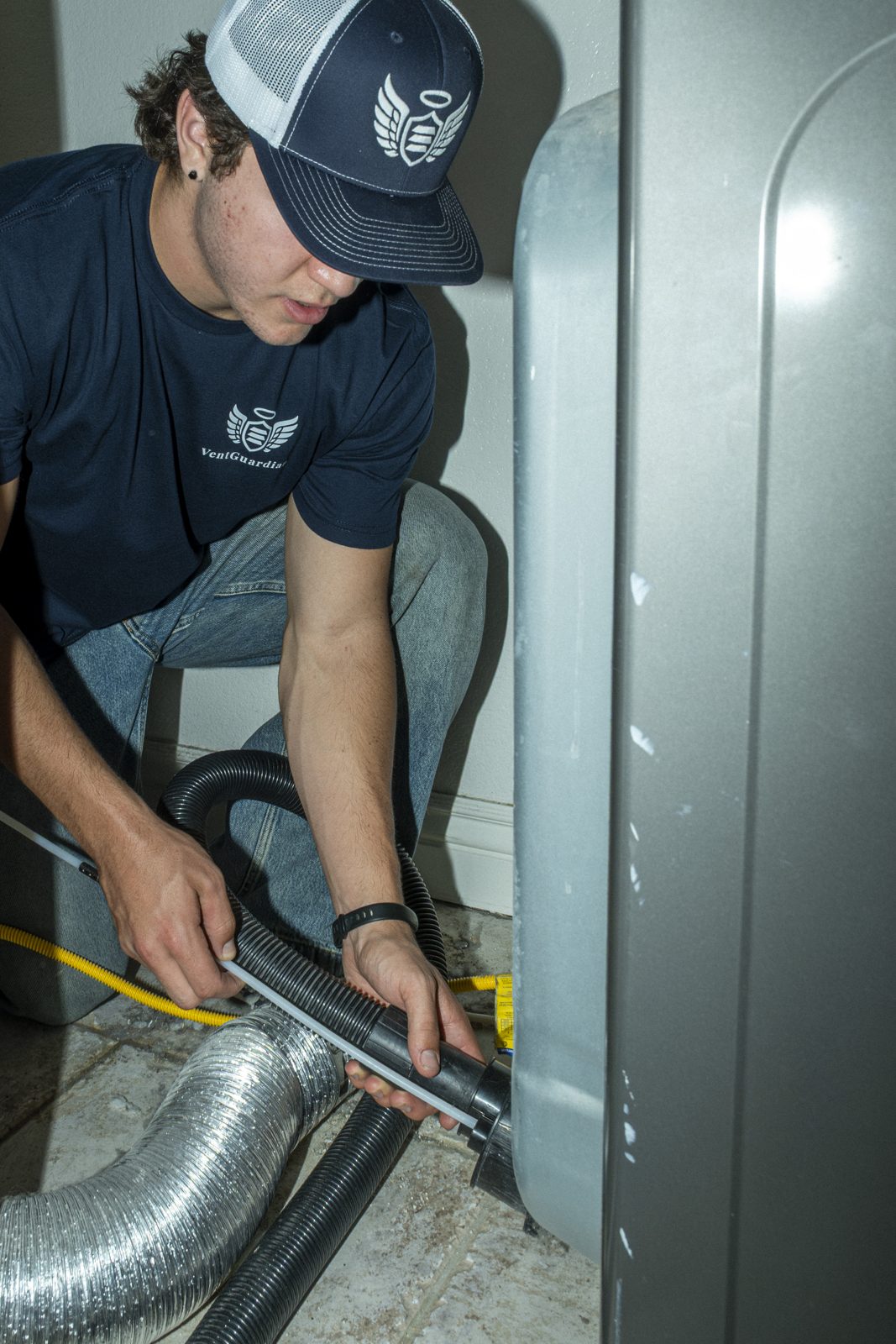
A proper cleaning means rotating brushes on rods run through the full length of the line, with a vacuum pulling at the same time, and a check of the exterior or roof termination to confirm the flap opens and air is moving.
How often should it be cleaned?
For a normal household running four to six loads a week, once a year is a reasonable target. Clean it more often if any of these apply to you:
- Your vent line runs more than about 15 feet, or has several turns
- You vent out through the roof
- You have a big family, or you wash a lot of towels, bedding, or pet blankets
- You have a screen or cage on the exterior cap
I check the exterior or roof termination on every job, and I show you what came out. If the transition duct behind your dryer is crushed or damaged, I will tell you, because a clean line feeding into a kinked duct does not fix the problem.
The lint a vent cleaning does not reach
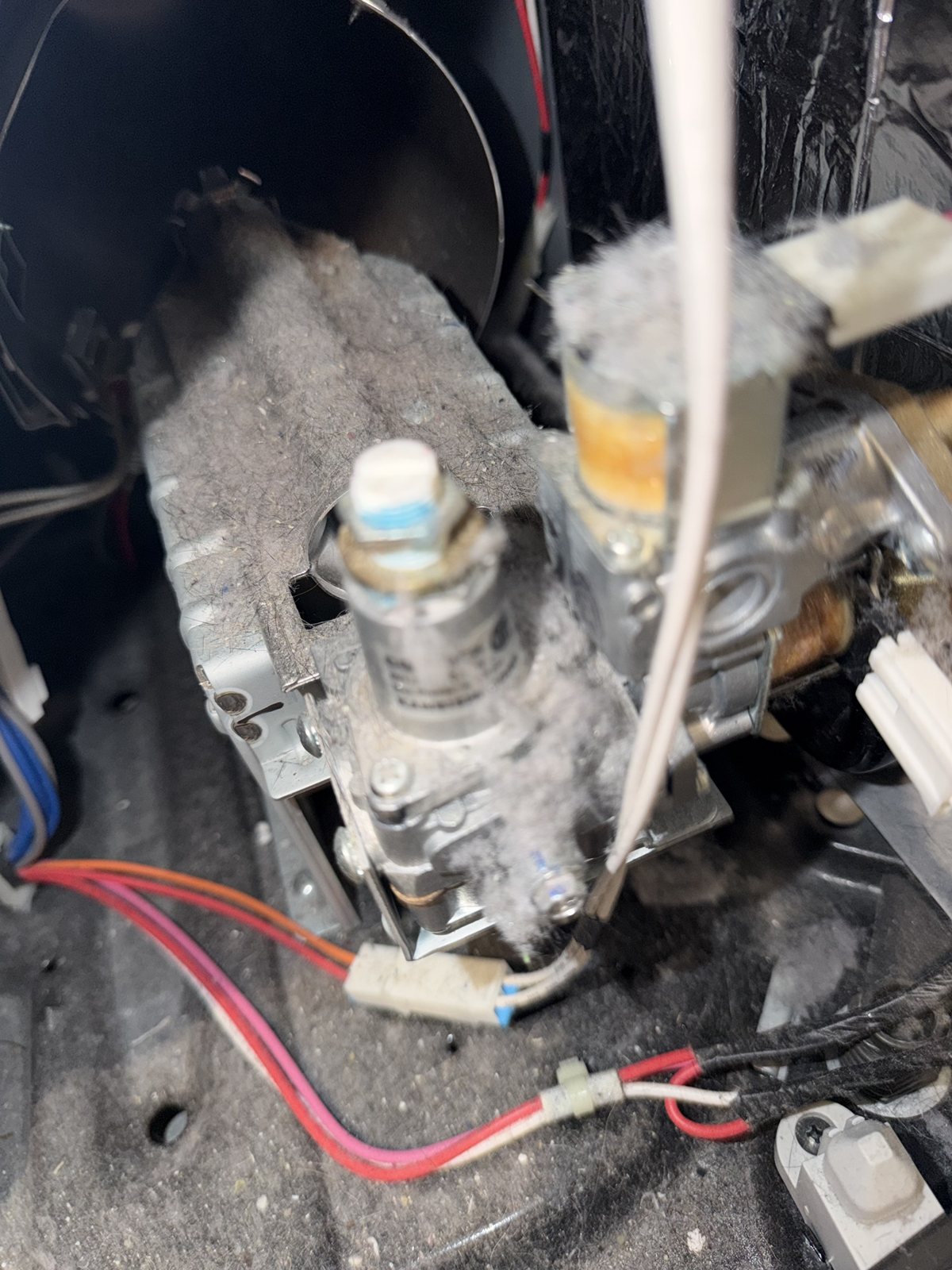
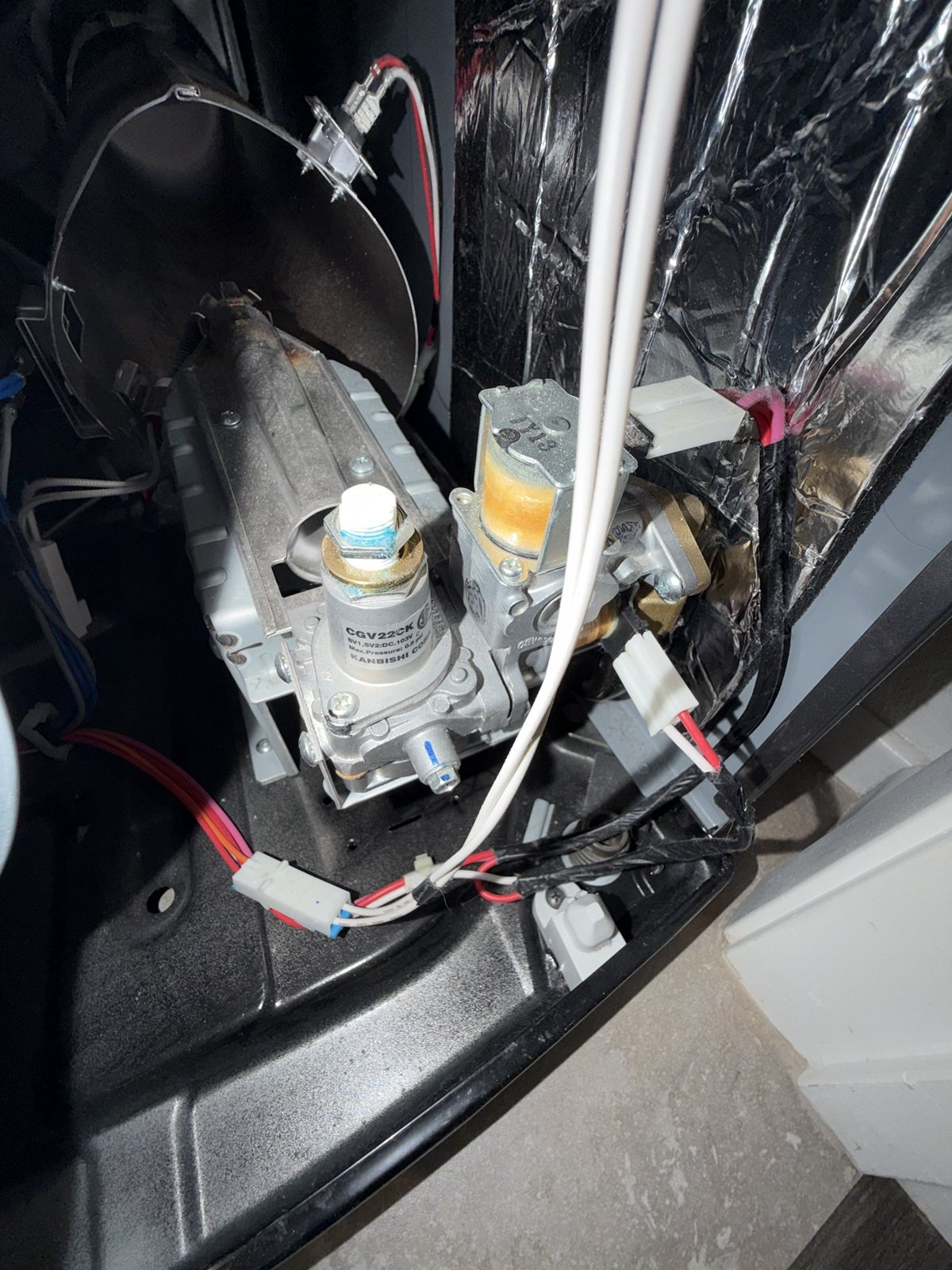
Cleaning the duct is only part of the picture. Lint also builds up inside the dryer itself — packed around the blower wheel, along the housing, and down around the heat source — the heating element on an electric dryer, the burner assembly on a gas one. None of that is reachable from the lint trap opening or from the duct. Getting to it means taking the front panel off the machine.
I started offering that as a separate service because of what I kept finding. On dryers that have never had it done, there is often a real pile of lint sitting inside the cabinet, a few inches from the hottest parts of the machine. A spotless duct does not move any of it.
Here is one from a gas dryer. Same machine, same angle, before and after. The grey felt in the first shot is sitting on and around the burner housing and the gas valve. The vent line on this house was not the problem.
You will see “every one to two years” repeated online for this. I went looking for that interval in manufacturer manuals and fire-agency guidance and could not find it stated as an official standard, so I am not going to repeat it like it is one. What I can tell you is what I find when I open dryers up. If yours has never had the inside done, it is worth asking about while I am there.
One note on gas dryers: there is a gas connection behind the machine, so this is not a pull-it-apart-yourself job. If you ever smell raw gas near a dryer, stop, do not touch switches or anything that could spark, get everyone out, and call the gas company.
What a cleaning does and does not do
A cleaning removes lint buildup, restores airflow, and cuts the drying time back down. It reduces a known risk factor and helps your dryer run the way it is supposed to. What it does not do is clean out the inside of the machine, which is why I treat that as its own job. And no cleaning can promise your dryer will never have a problem — nobody should tell you it can.
What it usually does mean: one cycle instead of two, a cooler laundry room, and a dryer that is not straining every time you use it.
Getting it checked
If your dryer has been running two cycles, that is your sign. It is not going to get better on its own.
I cover Murrieta, Temecula, Menifee, Wildomar, Lake Elsinore, Canyon Lake, Winchester, French Valley, Hemet, and Perris. Every quote is given before any work starts, so you know the price up front.
Call or text 951-970-0856, or request a free quote on the site.
